Finding the right hug chair can help children with autism or sensory processing needs feel calm, focused, and secure. This guide highlights top options designed for deep pressure, gentle rocking, and tactile engagement. Each chair is evaluated on comfort, safety, durability, and versatility for home, classroom, or therapy settings. Read on to compare features and find the best fit for a cozy sensory corner.
| Product | Brand |
|---|---|
| Sensory Soft Squeeze Seat for Kids | MOOZHEALTH |
| Sensory Chair for Kids, Inflatable Rocking Chair | Crakrora |
| KidBloom Spinning Chair for Autistic Kids | KidBloom |
| 21″ L × 19″ W Large Spinning Chair | Pterying |
| FERUERW Spinning Chair for Autistic Kids | FERUERW |
Sensory Soft Squeeze Seat by MOOZHEALTH
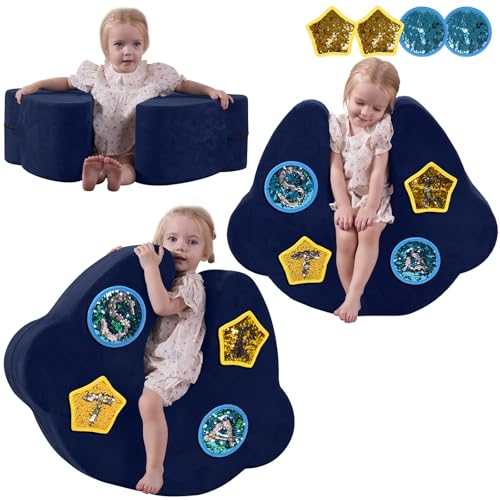
The Sensory Soft Squeeze Seat combines deep-pressure compression with a rocking motion and tactile sequin mats. It allows multiple grounding positions—full-body pressure when sitting and rocking, secure hug-like pressure from the side, or a prone resting pose for calm-down moments. The sequin mats offer visual and tactile input, and the cover is washable for easy maintenance. This chair is designed for children with autism, ADHD, or sensory-seeking needs in homes, classrooms, and therapy spaces.
Key features include: triple-sensory comfort; multi-position support; and attachable sequin mats via Velcro for a cosmic sensory corner. With a sturdy foam rocker and a washable cover, it aims to provide consistent, calming input to help focus and self-regulation.
Sensation Chair for Kids, Crakrora Inflatable Rocker

This inflatable sensory chair is built for durability with a leak-proof seal and a high weight capacity. It inflates quickly, enabling portable use in home, classroom, or on-the-go settings. The curved base supports rocking, bouncing, balancing, and snuggling, helping develop motor skills and provide a cozy nest for children with autism or ADHD during various activities.
Highlights include: fast inflation and portability; a robust 265 lb capacity; and a soft surface that encourages safe movement while promoting engagement through gentle rocking and compression.
KidBloom Spinning Chair for Autistic Kids

The KidBloom spinning chair features a safe dual-handle design for easy grip, aiding stability during movement. The reflective diamond panel enhances visual interest while the 360° silent swivel mechanism supports smooth, quiet rotation. The chair is designed to accommodate up to 220 lbs, making it suitable for a range of ages and activity levels. This option emphasizes stability, safety, and a visually stimulating environment to encourage sensory exploration.
Pterying Large Spinning Chair For Autistic Kids

Designed to exercise vestibular development, this multi-functional spinning chair supports sitting, kneeling, or lying down. It features thickened edges for safe gripping and a sturdy base to support up to 150 pounds. The chair is constructed from durable PP material with a metal base, suitable for both indoor and outdoor play. It aims to enhance balance, coordination, and spatial awareness while providing engaging sensory input.
FERUERW Spinning Chair for Autistic Kids

The FERUERW spinning chair is built to train balance and coordination with a comfortable, engaging design. It uses a metal anti-slip base and reliable construction to support up to 100 kg. The chair’s simple, appealing look makes it a popular option for children who enjoy spinning, while the safety-focused base helps minimize movement-related concerns during play.
Buying Guide
Purpose and sensory needs: Match the chair’s primary function to the child’s goals—deep pressure, vestibular input, or a calm space for reading. Consider whether the child benefits more from compression, rocking, spinning, or a combination.
Safety and durability: Look for sturdy bases, non-slip surfaces, weight limits, rounded edges, and washable covers. Chairs with safety handles or grips can help maintain control during movement.
Comfort and size: Ensure the chair accommodates the child’s height and weight and allows multiple positions. A chair that supports sitting, reclining, and lying down can offer flexible use for different activities.
Portability: For classrooms or therapy centers, consider inflatable or lighter designs that can be moved between spaces. Quick setup and breakdown are advantages for busy environments.
Maintenance: Washable covers and durable materials reduce long-term upkeep. Check for removable covers and ease of cleaning to maintain hygiene in shared spaces.
Cost and warranty: Compare long-term value, not just upfront price. Some chairs offer better durability or multipurpose use, which can justify higher initial costs.